Carver CX vs C7: Which Should You Choose?
Carver CX vs C7 for beginners and pumping: compare mechanisms, current specs, prices, adjustment, and the right truck for how you want to ride.
Quick buy: featured picks
As an Amazon Associate we earn from qualifying purchases. Other retailer links are also affiliate. No extra cost to you.
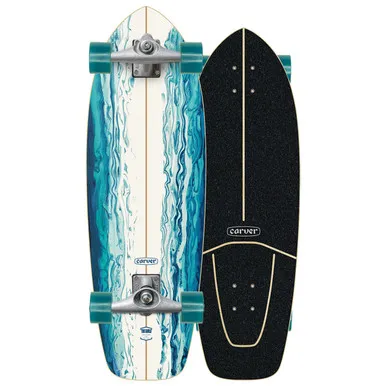
Catalogue reference: $239. Retailer prices may differ.
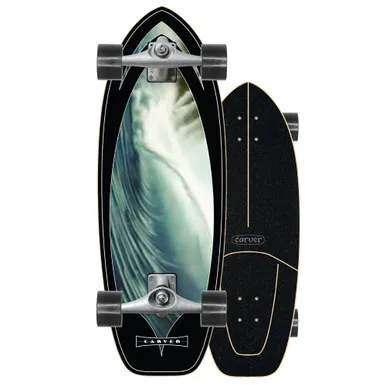
Catalogue reference: $239. Retailer prices may differ.
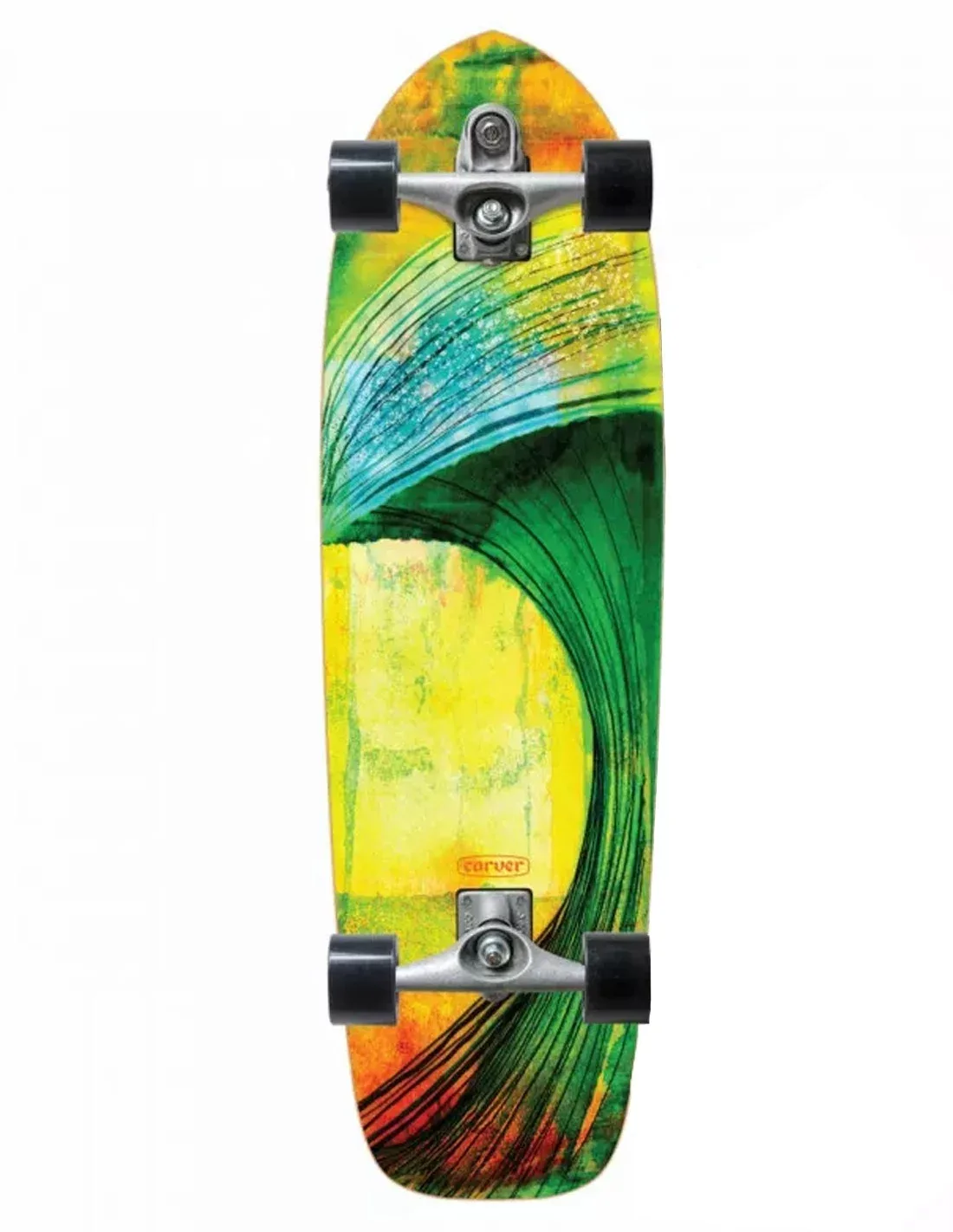
Catalogue reference: $279. Retailer prices may differ.
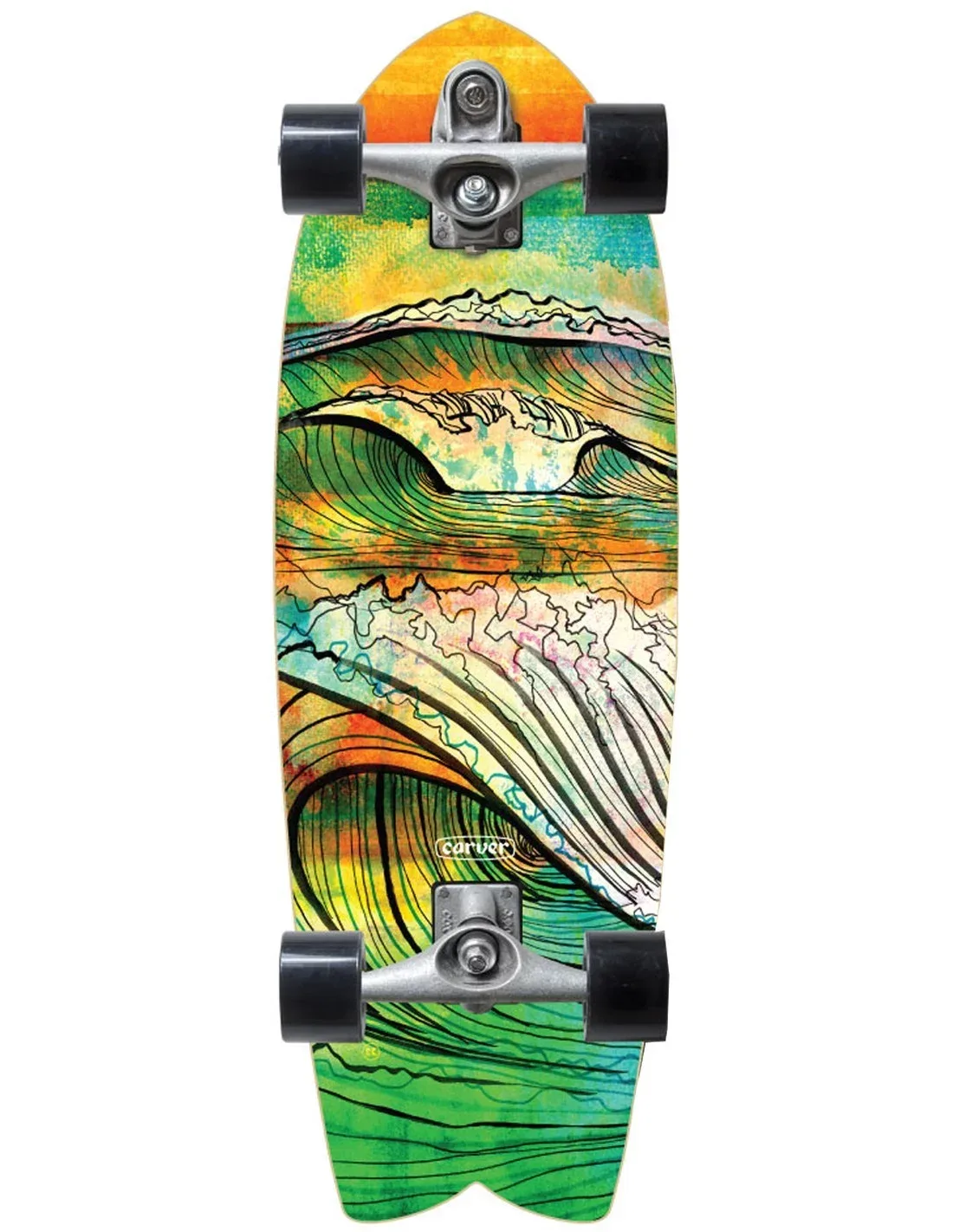
Catalogue reference: $279. Retailer prices may differ.
Choose the Carver CX if you are a beginner, ride bowls, cruise, or want one predictable setup for different jobs. Choose the Carver C7 if your priority is low-speed pumping and a smoother, flowing surf-training feel. Both can carve and pump. The front mechanism changes how they get there.
This comparison uses current truck specifications and complete-board records from our 200-model catalog. It does not pretend that catalog counts are riding tests. The database currently contains 30 dedicated CX-equipped boards and 9 dedicated C7 boards, plus 5 models sold with either system.
Quick answer
| If you want… | Pick | Reason |
|---|---|---|
| The easiest first Carver setup | CX | Progressive bushing response and simple tuning |
| One board for cruising, carving, and bowl | CX | More direct steering and broad setup range |
| Flowing surf-training turns | C7 | Spring-loaded dual-axis swivel |
| Low-speed pumping | C7 | The swivel arm encourages linked turns |
| Lower entry price | CX | Triton CX completes start at €182.99 in the catalog |
| Less mechanism to maintain | CX | Bushings instead of the C7 spring and swivel assembly |
Compare the mechanisms directly in our CX vs C7 truck comparison.
The core difference: bushings vs a spring swivel
The Carver CX is a bushing-based reverse-kingpin surfskate truck. When you lean, its bushings compress and the steering builds progressively. You can change the feel through kingpin tension and bushing hardness.
The Carver C7 adds a spring-loaded swivel arm in front of the turning axle. That extra axis creates a smoother, more articulated steering path. Spring tension can be adjusted, but the mechanism has more moving parts than the CX.
Carver currently describes the CX as the more direct, snappy system and the C7 as smooth and flowing. That is a better practical distinction than saying one “snaps like a surfboard.” A surfboard responds to rails, fins, water, and wave force. A skateboard truck cannot reproduce those forces.
For the wider mechanism picture, read our surfskate truck types guide and the data-based spring vs bushing comparison.
CX vs C7 specifications
| Specification | Carver CX | Carver C7 |
|---|---|---|
| Mechanism | Reverse kingpin with bushings | Dual-axis swivel arm with spring |
| Catalog pivot value | 25° | 25° |
| Axle width | 9” | 9” |
| Truck-set weight | 1,134 g | 1,225 g |
| Recorded truck height | 3.625” | 2.875” |
| Truck-set catalog price | €120 | €145 |
| Dedicated complete boards | 30 | 9 |
| Additional selectable boards | 5 CX/C7 options | 5 CX/C7 options |
| Complete price range recorded | €182.99-€385.99 | €239-€274.99 |
| Best fit | Beginner, bowl, cruising, all-round | Surf training, flowing carves, pumping |
The pivot figure needs context. The canonical truck records list 25° for both systems, but some complete-board C7 records contain a different or missing angle. Until those product records are reconciled, we treat the truck-system entry as the source and do not use pivot angle alone to predict ride feel.
The widest CX price range includes specialist Zee Bracket distance setups. Standard CX completes with recorded EUR prices run from €182.99 to €311.99. Prices are catalog values checked on 30 July 2026, not live retailer quotes.
Is the Carver CX or C7 better for beginners?
The CX is the better starting point for most beginners. Its response builds through the bushings rather than adding a second spring-loaded steering axis. That makes it easier to feel how much input you are giving the board and easier to calm the setup through bushing choice and sensible kingpin adjustment.
The catalog supports that positioning without proving it on its own: 9 of the 30 dedicated CX boards carry a beginner level tag, compared with 3 of the 9 dedicated C7 boards. Those tags reflect manufacturer positioning and our taxonomy, not a controlled riding trial.
Choose the CX first if you:
- Have no board-sport background.
- Want to cruise as well as carve.
- Plan to ride bowls or transitions.
- Prefer a setup with fewer moving parts.
- Want a complete below €200, such as the Carver Triton Signal 31 or Triton Astral 29, both recorded at €182.99.
The C7 is not off-limits to beginners. It makes sense if you already know that surf-training flow matters more than straight-line calm and you can accept a more active front end while learning. Deck width, wheelbase, and wheel setup still decide whether the complete board feels friendly.
Our entry-level surfskate guide compares the Triton route with cheaper bushing and spring options.
Which pumps better: Carver CX or C7?
The C7 is the natural pick for riders who define pumping as flowing, linked turns at low speed. Its spring-loaded swivel adds steering movement and return, so the board can feel willing to continue the rhythm once you coordinate your legs and upper body.
The CX is not a poor pumping truck. It uses a more direct path and asks you to work with its bushings, wheelbase, and deck geometry. Carver-based distance builds such as CX Zee Bracket setups show that a bushing system can pump efficiently when the whole board is designed around that job.
This is why “C7 pumps, CX does not” is the wrong conclusion. The better rule is:
- C7 for flowing surf-training pumps and deep linked turns.
- CX for direct pumps, broader use, and setups that also need stability.
Technique can outweigh the hardware. Our best surfskates for pumping explains how wheelbase and wheels change the result.
How they feel underfoot
Without a controlled back-to-back test, ride feel should be described from the mechanism rather than invented as first-hand experience.
The CX builds resistance progressively as the bushings compress. You feel a clearer connection between lean and steering, and the board recentres through the urethane. That directness helps in bowls, where holding a line matters, and in cruising, where you do not want the front end moving constantly.
The C7 separates swivel and axle movement. It can trace a deeper steering path with less of the conventional-truck feel. The result is smoother and more flowing, but the extra movement asks for more attention when you are learning or travelling in a straight line.
Wheelbase can amplify or calm either truck. A C7 on a long deck can feel more settled than a CX on a very short one. Compare the complete boards, not just the badge on the front truck. The wheelbase guide explains why.
CX vs C7 for bowls, cruising, and surf training
Bowl and skatepark
Pick the CX when carving transitions is the main job. Its direct response and simpler return make it easier to hold a line. The best bowl surfskates lean heavily towards stable bushing setups for the same reason.
Cruising and commuting
Pick the CX for most mixed-use boards. It recentres progressively and does not require the constant steering input that a loose spring setup can invite. A long wheelbase and large soft wheels still matter more than the logo for real commuting comfort.
Surf training
Pick the C7 if you want Carver’s more articulated surf-training option. It supports flowing rail-to-rail movement and low-speed pumping. Pick the CX if your land training also includes bowls, faster lines, or everyday cruising.
Adjustment and maintenance
The CX can be adjusted through kingpin tension and bushing changes. Do not crank the kingpin down until the bushings deform; small changes are easier to evaluate and less likely to damage the setup.
The C7 lets you change spring tension through its adjustment point. Follow Carver’s instructions and inspect the swivel assembly periodically. More moving parts do not make it unreliable, but they do give you more parts to keep clean and correctly tightened.
Both truck sets use a Carver C2 rear in their current standard configuration. If you plan to swap systems on an existing deck, verify the exact hardware, risers, clearance, and geometry for your model before ordering. The database does not establish universal drop-in compatibility for every Carver generation and deck.
Price and board availability
The current catalog records:
- CX truck set: €120.
- C7 truck set: €145.
- Dedicated CX completes: from €182.99.
- Dedicated C7 completes: from €239.
The CX appears on Carver, Triton, Arbor x Carver, and Loaded x Carver boards, including specialist distance builds. The C7 range is smaller and concentrated around Carver completes. Five additional board records can be ordered with either CX or C7, so a raw model count should always state whether those selectable versions are included.
Browse the catalog search for CX and catalog search for C7 to see current complete boards.
Verdict
| Rider profile | Better starting point |
|---|---|
| Complete beginner | CX |
| Beginner focused on surf training | C7, if comfortable with a more active front end |
| All-round rider | CX |
| Bowl or park rider | CX |
| Low-speed pumping and flowing carves | C7 |
| Cruiser or commuter | CX |
| Lower budget | CX |
| Rider who wants the simplest mechanism | CX |
For most buyers, the CX is the safer all-round choice. The C7 earns its place when flowing surf-training turns are the priority, not because it is universally “more surf-like.”
Compare complete CX and C7 boards in the surfskate comparison tool or place both truck systems side by side in the truck comparison.
Frequently asked questions
Is the Carver CX or C7 better for beginners?
The CX is the safer starting point for most beginners. Its bushing-based steering builds progressively and is easier to tune. The C7 can still work for a beginner who specifically wants a looser, flowing surf-training setup and accepts a steeper first few sessions.
Is the CX or C7 better for pumping?
The C7’s spring-loaded swivel favours low-speed flow and linked pumping. The CX also pumps well, and Carver-based distance setups use it successfully. Wheelbase, wheels, setup, and technique can matter as much as the front truck.
Can I adjust Carver CX and C7 trucks?
Yes. The CX can be tuned through kingpin tension and bushing changes. The C7 has an adjustment for spring tension. Make small changes, follow Carver’s instructions, and check that all hardware remains secure before riding.
How much do Carver CX and C7 trucks cost?
Our truck database lists the CX set at €120 and the C7 set at €145. Recorded complete-board prices start at €182.99 for dedicated CX boards and €239 for dedicated C7 boards. Prices were checked in the catalog on 30 July 2026 and can change.
Which Carver truck feels more like surfing?
The C7 gives Carver’s smoother, more flowing dual-axis response, while the CX feels more direct and progressive. Neither reproduces water or wave force. Choose the C7 for surf-training flow and the CX for a more stable all-round setup.